Tuesday, March 12, 2013

Amelia Earhart

Amelia Earhart

Was an American aviation pioneer and author. She was the first female pilot to fly solo across the Atlantic Ocean. She got the U.S Distinguished Flying Cross for this record and set other records. She joined the faulty of the Purdue University aviation department and was also a member of the National Woman's Part, along with a supporter of the Equal Rights Amendment. 

She disappeared over the central Pacific Ocean and her life still continues to this day.


Flying career: Earhart convinced her father to let her fly, and convinced him to teach her. He told her that it would be hard work and take a lot of commitment, but she had already knew that. She became a member of the American Aeronautical Society in Boston. She helped promote flying for devoted females all over. She had gained most of her fame from her transatlantic flight, but shortly took on her own adventures doing solo flights. 

Earhart was seen as a strong women who worked for everything that she wanted. She promised her dad from the start that she would work hard and through all the rough patches she would stay strong, and she kept that promise for the rest of her years to come.

AP Theme: Culture- Everything she did affected the way that people looked at the world. She influenced women to go out and try new things, along with exploring the world. She even influenced men to realize that women weren't just meant for the house hold, they were more productive then that.

Monday, March 4, 2013

USS Maine


USS MAINE

There was tension between Spain and the United States when it came to Cuba. Cuba had tried to gain their independence multiple times losing each time. The Cuban revolutionists continued to plan and raise support from the U.S. Spain's reaction to this support was a policy called "Butcher". Orders were given to pacify the island which included putting rebels of support and civilian populations into district areas near military headquarters. This resulted in the starvation and death of 100,000 Cubans.

This outraged many Americans and fueled many Yellow Press stories, putting pressure on Cleveland and McKinley to end the fighting.

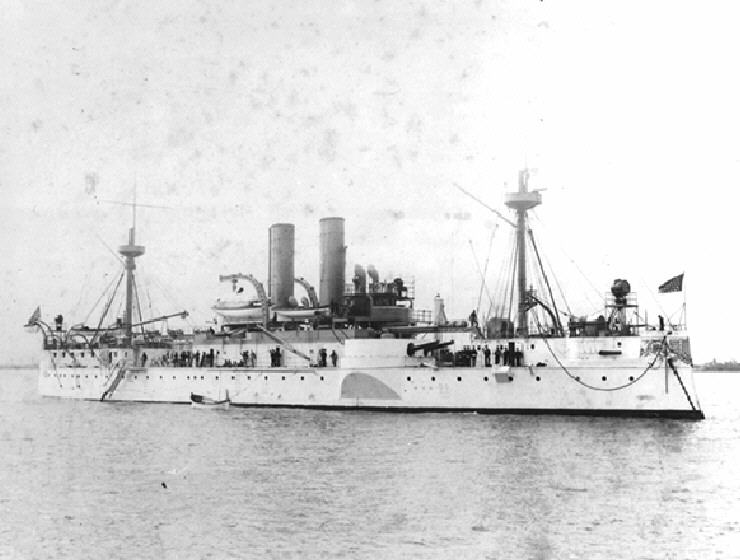
When forces in Havana instigated riots they had deep concerns of the safety of Americans and thought that protecting the U.S. citizens should be on hand. So McKinley sent out the second class battle ship, the USS Maine

In January 1898 the Main was sent from Key West Florida  to Havana, Cuba to protect the U.S. interest in Cuban War of Independence. Three weeks later there was an explosion on board the Maine in Havana Harbor. Most of the crew was sleeping or in resting in their quarters when the explosion occurred.

226 men lost there lives because of the explosion

At first they thought that a naval mine caused the explosion. Yellow Journalism however had changed some of the stories. Papers had exaggerated and distorted any information that they could attain. Papers had accused Spain of the explosion, thinking that it was their way of keeping Havana Harbor safe.

This event didn't result in immediate war with Spain but fueled the nation to head towards war. Eventually it turned into the Spanish- American War in April of 1898.

AP THEME: American Identity- The Yellow Journalism was creating a new image for the American people. They had made Spain look worse then they were and helped gear people to war. The American Identity was being fooled by papers and stories about what really had happened to the ship. American Identity was also shaped to look strong and confident. The U.S. went bold headed into Cuba thinking of only themselves and what resources we could gain from Cuba, rather then the actual concern at hand. It made the U.S look like two different identity's.

Visual Clip:
http://www.youtube.com/watch?v=CNxHn4_U_D8


Wednesday, January 9, 2013

The Gilded Age

The Transcontinental Railroad

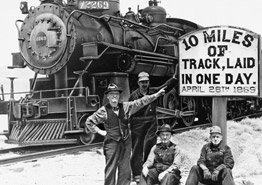
The Railroad was the first transportation system that connected the Atlantic to the Pacific coasts of the United States. The Railroad was one of the most technological transportation device in the 19th century and was known as helpful throughout the time for economic benefits. It established the nations economic infrastructure for the future so that they could end the traffic with stagecoach lines and wagon trains. It provided a much quicker and cheaper way of transportation  of emigrants and goods. This allowed the railroad, bankers and the government to promote the worldwide migration to attract specific populations for agricultural progress with sales of land grants, and then provided farmers with the transportation of crops.
The workers were mainly from the Union Pacific, consisting of army vets and Irishmen. The Central Pacific was facing a shortage of workers a lot so they relied on Chinese emigrant labors for the construction. The more the railroad would extend out into the West, the more population came with it. It had established a strong system for commerce and trade, resulting in the lack of Indian Territory.

The railroad had made it easier for monopoly's to form, some being the biggest scandal of them all, the Credit Mobilier. Durant had come up with the plan to have Credit Mobilier subcontract to do the actual track work. He gained control of the company by buying out one of the employee's. He was charging Union Pacific often twice or more the customary cost for track work, thus paying himself. This was to mire down Union Pacific work. The railroad was known as a very useful economic benefit for the nation and also connected social life or differences to political philosophy's and scandals.

AP Themes: 

Economic Transformation: Many land grants along with economic profit from the transportation of goods.

Political: Scandals with giving stocks to political officials from company's creating monopoly's.

Environmental: The places that railroads were being built all had to be based upon the land and the environment.